G7 discusses cooperation mechanism to mitigate AI risks
Are leaders beginning to grasp the AI threat?
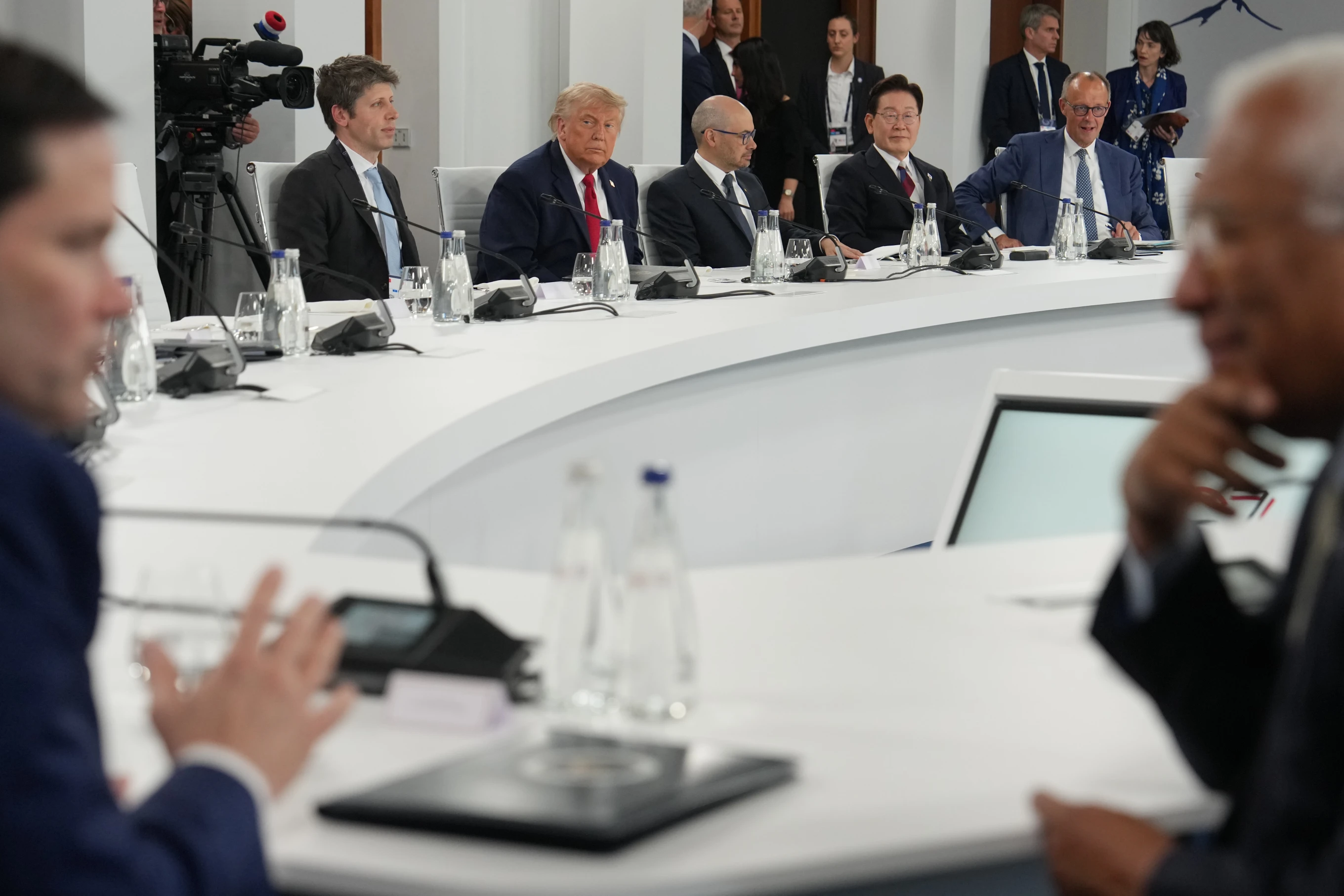
Following last week’s G7 meeting, Emmanuel Macron announced, according to Politico, that the G7 would “build, in the coming months, a platform for discussion and cooperation between a few democracies in response to the risks posed by artificial intelligence,” in order to “define common standards together.”
The G7 meeting convened not only representatives of member countries but also the leaders of major AI companies, including OpenAI, Anthropic and Google DeepMind, as well as non-G7 countries including Brazil, India, and South Korea.
It was reported that during the meeting, Anthropic CEO Dario Amodei and Google DeepMind CEO Demis Hassabis called for a US-led coalition to shape AI rules and standards.
PauseAI CEO, Maxime Fournes, said, “It is certainly positive that countries are talking about regulation but I’m not sure leaders are grasping the required urgency.”
“Governments were already concerned about the impact of Anthropic’s Mythos but before the end of the year a newer, more powerful model will be released. A few months after that expect a model twice as powerful again. Binding regulation is needed immediately before this gets away from us.”
Victor Riparbelli, CEO of UK-based Synthesia, told POLITICO after the meeting, “Everybody knows that it’s really important that G7 countries and its allies band together - that we win in the AI race and … don’t let autocratic countries take the winning position.”
China, one of the AI superpowers, was not represented at the meeting.
Fournes added, “We need to stop the race rhetoric: we can only reduce the catastrophic risks posed by AI if all countries sign up to a deal - any discussions must include China.”
This is the first time G7 members have acknowledged that the most advanced AI systems pose major security risks that require a collective response from states. PauseAI welcomes this development and calls on France, which holds the G7 presidency until the end of the year, to do everything in its power to turn this cooperation into a binding international agreement.
What is needed to reduce the risks posed by AI?
- Mere “common standards” will be ineffective without binding rules and an effective system of oversight and sanctions.
- The development of new systems must be halted until the conditions to reduce the risks posed by such systems can be put in place.
- Cooperation must be genuinely international. Restricting it to “a few democracies” and framing it as a commercial or even military alliance against China is both ineffective and dangerous. The risks associated with the most advanced systems - cyberattacks, information manipulation, biological or chemical misuse, loss of control and extreme concentration of power - do not stop at borders. AI safety must be treated as a global common good.
(AP Photo/Julia Demaree Nikhinson, Pool)
About PauseAI
PauseAI is a non-profit organisation active in 15 countries. We work to ensure that the development of the most powerful AI systems is safe and democratically controlled. We do this by informing the public, mobilising citizens and working with policymakers around the world.
Press Contact
Jonathan Moody\ Communications Director, PauseAI\ jonathan@pauseai.info